Pastoralists in far western New South Wales are scrambling to sell or agist stock after a devastating dust storm stripped paddocks bare, compounding the impact of ongoing drought. The Pastoralists Association of West Darling is now seeking emergency assistance from the New South Wales government as landholders warn recovery could take years.
PLAY AUDIO:
Audio Script:
COUNTRY HOUR EP DREW RADFORD: You are tuned into the Country Hour, coming from the National Alpaca Show and Sale being held down here in the Adelaide Showgrounds.
The Pastoralists Association of West Darling is meeting today for the first time since the dust storm that’s caused havoc for landholders in the far western New South Wales. The gales have wiped away most feed, and producers are now forced to sell stock or agist as quickly as possible. The association has put in an application to the New South Wales government for emergency assistance, and is also trying to source more agistment.
Broken Hill reporter Nicky Redl is at the association’s council meeting now. Nicky, you’ve had a bit of a detailed look at this because you started the day by broadcasting the Broken Hill Rural Report from a property where they’re frantically mustering.
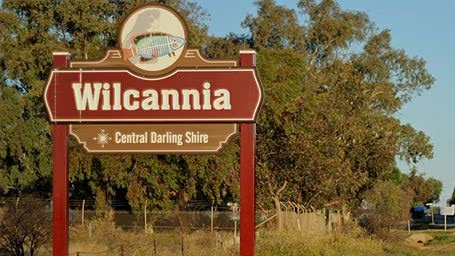
NICKY REDL: Yeah. Look, Drew, going to Cawkers Well station near Wilcannia really gave me an insight on how much damage this storm has caused. Feeding stock was already a struggle here for many because of the drought, and people were destocking slowly. But this storm now has really wiped away just about anything there was.
We took a drive around the station in the evening, and there just isn’t any more than a few dry bushes left. So, people even don’t really have time to think about what to do, but need to truck out stock as quickly as possible. And that’s reflected itself also in today’s Pastoralists Association Council meeting, because fewer members than usual have turned up and the rest is busy on their stations mustering. Now with me, I have Randal Beven from the association. What solutions is the association working on at the moment?
RANDAL BEVEN: What we’re trying to do is, get the, first of all, the Federal Minister for Agriculture, Tony Burke, to come out and have a look at the area, just so he understands how devastating this dust storm has been. The other things that we’re trying to do is get an increase on the ceiling for freight subsidies when we’re sending stock away or bringing hay in to feed what’s left here.
NICKY REDL: And I understand you’re also looking for some additional agistment options, not only in South Australia but also Victoria.
RANDAL BEVEN: Yeah, the the people down on the west coast and that have been very kind, taking a lot of the stock out of this area. They’re heading down there all the time. One of the problems is cattle adjustment, simply because they’re not really set up for cattle down there. So we’ve got to go, Victoria or the south east of South Australia with that adjustment.
NICKY REDL: And what sort of financial cost does such a storm accumulate?
RANDAL BEVEN: There’s ongoing cost. First of all, the freighting in and out of stock. Once the it does rain, then the stock have to be purchased back and probably at a higher price than any that we might be able to sell now because the demand will be higher. Also, the cost in the actual damage to the countryside. Not only is the bush completely covered in dirt and any dry feed there was has blown away, but all the seeds have gone as well. A lot of drift sands have gone into dams, and they’ll need to be cleaned out at some stage, and that sort of thing.
NICKY REDL: So, how long do you think will it take people here to recover?
RANDAL BEVEN: It’ll be very hard to see a recovery in less than 3 or 4 years, even if there’s good rainfall, just because it’s going to be harder to buy the stock back and to rebreed them.
NICKY REDL: And do you think people in other areas are familiar enough, really, with the effects these dust storms cause?
RANDAL BEVEN: A dust storm, it’s a natural disaster, if it’s declared a natural disaster, it has to be treated really the same way as a bushfire or a flood. The bushfire will burn the feed, but the dust storm covers it in dirt so the sheep can’t eat it anyway.
NICKY REDL: Thank you very much for that.
DREW RADFORD: Thanks very much, Nicky. I reckon you deserve a bit of a rest. You’ve been doing a lot of driving and a lot of traveling around western New South Wales. It’s a hard story out there. Remember, SAFF is running a hotline to help with agistment, so you can contact SAFF directly to help out with that if you want. We’ll have more from the National Alpaca Sale and show after the regional news. It’s 12:30.