With renewable energy generation on the rise, energy storage systems, such as utility-scale batteries, have become crucial for managing the shift toward wind and solar. Renewable energy is not always accessible when it’s most needed, and batteries ensure availability during peak hours.
But what exactly are the risks? We all know we are not supposed to pack them in our luggage when flying, and there have been some highly publicised cases of batteries causing fires.
What exactly are the risks, and is having them in our neighbourhoods a good idea? Will there be noise, what is the visual impact, and how is fire danger mitigated?
Before we address those questions, let’s clarify what kind of batteries we are talking about.
What Are Utility-Scale Lithium-Ion Battery Energy Storage Systems (BESS)?
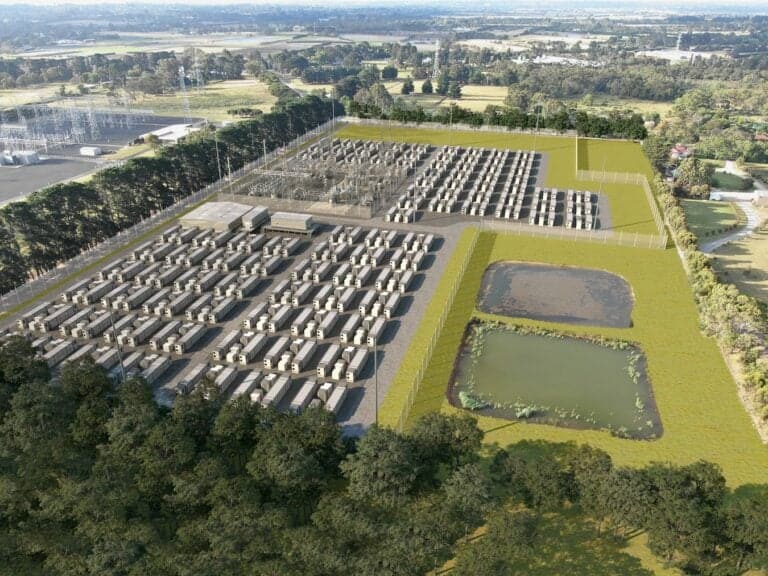
Utility-scale lithium-ion batteries are essentially many smaller batteries bundled together into a bigger unit, comparable to a shipping container. To provide the storage capacity needed, you may have anywhere from a couple to more than a thousand such containers in a fenced yard or building. The facility is then connected to the grid or power-generation assets.
The largest battery storage system currently is a 1,200 megawatt-hour (MWh) facility in Monterey County, California, that can power about 225,000 homes during peak electricity demand. The site is the size of three football fields.
In Australia, renewable energy developer Maoneng is building a much smaller pilot project in Victoria’s Mornington Peninsula. The 480 MWh utility-scale battery energy storage system can power about 40,000 homes during peak demand.
Battery Energy Storage System Safety and Fire Risk
And while energy storage offers clear advantages, safety must be the top priority.
“Any battery has a risk of malfunction. In the case of industrial-scale batteries, the concern would be of the battery overheating and beginning a fire, and that fire potentially having a cascading effect on other batteries within the same facility,” said Maoneng’s Director of Development Allison Hawke.
“But while everything has a risk to it, any form of construction or cladding on a building, the risk is incredibly small, and the level of regulatory protection is quite strict,” added Ms Hawke.
How Fire Risk Is Managed in Utility-Scale Lithium-Ion Battery Facilities
To manage potential risks, batteries undergo rigorous assessment and testing before installation and are monitored 24/7 to ensure the system is switched off if they overheat.
“They have inbuilt redundancy and cooling systems where they depower if they reach a certain temperature,” Ms Hawke said.
Strict hazard assessments further ensure that batteries are installed only on sites that are set back from residential areas, workplaces, or sites where fire is likely to spread easily, should anything go wrong despite the numerous safety procedures.
Visual Impact and Noise Concerns Around Battery Storage Facilities
Aside from safety, communities may be concerned about the visual impact of storage systems and the noise they generate.
Maoneng Director of Engineering Michael Tran said the visual impact will depend on the site’s location.
“If the battery is sitting on flat land, and the neighbours are also on flat land, you are not even going to notice, because you will have trees obstructing the view.”
“However, if the site is downhill and the neighbours are uphill, then yes, they may be able to see part of it.”
But Mr Tran also pointed out that battery storage sites are significantly smaller than solar farms, and much quieter and cleaner than mining operations.
“It doesn’t create a lot of noise. It’s a relatively quiet site,” he said.
Community Benefits of Utility-Scale Battery Storage Projects
And there is plenty of upside to having an energy storage system nearby.
“Batteries bring benefits. During construction, you are going to have a lot of people in town who can get involved,” said Mr Tran.
“A lot of jobs are going to be created, and then during maintenance, you are looking at bringing TAFE qualifications to workers in town to train them up to maintain the batteries.”
As with anything new, it is understandable that people have questions about how it will impact their lives, and it is important to continue working with communities to address concerns and provide information.
Battery Recycling, Carbon Emissions and the Environmental Impact of Energy Storage
There are still many problems to be solved, such as the appropriate recycling of batteries and reducing carbon emissions associated with battery manufacturing.
However, what we do know is that, compared to renewables, the negative impact of fossil fuels on human health and the environment is by far worse and detrimental to our future. Investment in renewable energy and battery storage will be essential to building a reliable, lower-emissions electricity system for the future.
Created for the Australian Maoneng Group’s Transcendence Network for publication in August 2021.